
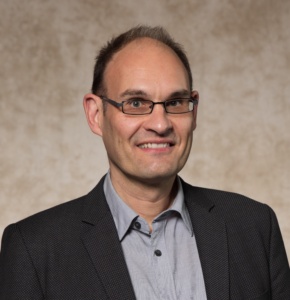
 This year the lectures will be held by Oliver Freiberger. He is a highly regarded scholar of religion who is widely known for his work on early Buddhism, asceticism, comparative method in the study of religion and other related topics. In his widely praised book Considering Comparison: A Method for Religious Studies Freiberger has sought to rehabilitate the comparative method for the study of religion by highlighting its fundamental role and analysing the comparative process in detail. In the three Paulson lectures, Oliver Freiberger will be focusing on boundaries between religions, aiming to propose a framework for studying religious boundary-making. Paulson Lectures in the Study of Religion are organized by the Estonian Society for the Study of Religions in cooperation with the School of Theology and Religious Studies of the University of Tartu. The lectures are open to everyone and do not require pre-registration.
SCHEDULE
Religious Boundaries: An Introduction
3.11.2025 – 16:15-17:45 Ülikooli 18-228
This first lecture introduces the study of religious boundaries. Starting with a case study from early Buddhist history, it lays out the topic addressed in these three lectures: The questions of how boundaries are drawn in the field of religion, both by religious actors and by modern scholars, and how this boundary work may best be studied. The lecture discusses the general usage of the term “boundary,” its function as a scholarly metaphor, as well as relevant existing scholarship about ethnic and religious boundary-making.
Boundaries of Religions and of Religion
4.11.2025 – 16:15-17:45 Ülikooli 18-228
The second lecture in the series focuses on two separate forms of boundary-making. First, it discusses the boundaries between religions. It asks: How do scholars envision “a religion”? Are there identifiable features that distinguish one religion/religious tradition from another religion/religious tradition and thus mark a boundary? And who determines what those features are? Secondly, it addresses the boundary between religion and non-religion, discussing both the scholarly act of defining religion and emic distinctions between religious and non-religious spheres.
The Analysis of Religious Boundary Work
5.11.2025 – 16:15-17:45 Ülikooli 18-228
The final lecture addresses boundary-making in local contexts. Presenting multiple case studies from various traditions, it proposes a methodological framework for studying religious boundary work that includes analyses of the boundary’s exact location, the interpretation and evaluation of the postulated difference, the means by which boundaries are expressed and possibly enforced, the motives behind drawing the boundary, and the actors who undertake boundary-making in the respective socio-historical context.
Dr. Oliver Freiberger is Professor of Asian Studies at The University of Texas at Austin. He received his doctoral degree from the University of Göttingen, Germany, in 1999 and completed his Habilitation at the University of Bayreuth, Germany, in 2009. He has taught at UT Austin since 2004. Freiberger’s main research interests are early Buddhism, asceticism, the comparative method in the study of religion, and religious boundary-making. He is the author of Der Orden in der Lehre (2000), Der Askesediskurs in der Religionsgeschichte (2009), Buddhismus (2nd ed. 2015, with Christoph Kleine), Considering Comparison (2019), and Religionsvergleich (2022), the editor of Asceticism and Its Critics (2006), co-editor of multiple other volumes, and author of numerous articles and essays.

Ivar Paulson Lectures is a lecture series that focuses on the most noteworthy topics, issues, and new developments in the contemporary study of religion. Ivar Paulson (1922-1966) was known for the wide range of peoples, religious beliefs and practices he was interested in and which he studied by combining a number of different research approaches. Similarly, Paulson’s lectures aim to highlight and bring together some of the more significant developments from various approaches and perspectives in the contemporary study of religion.